
How a stair carry actually works
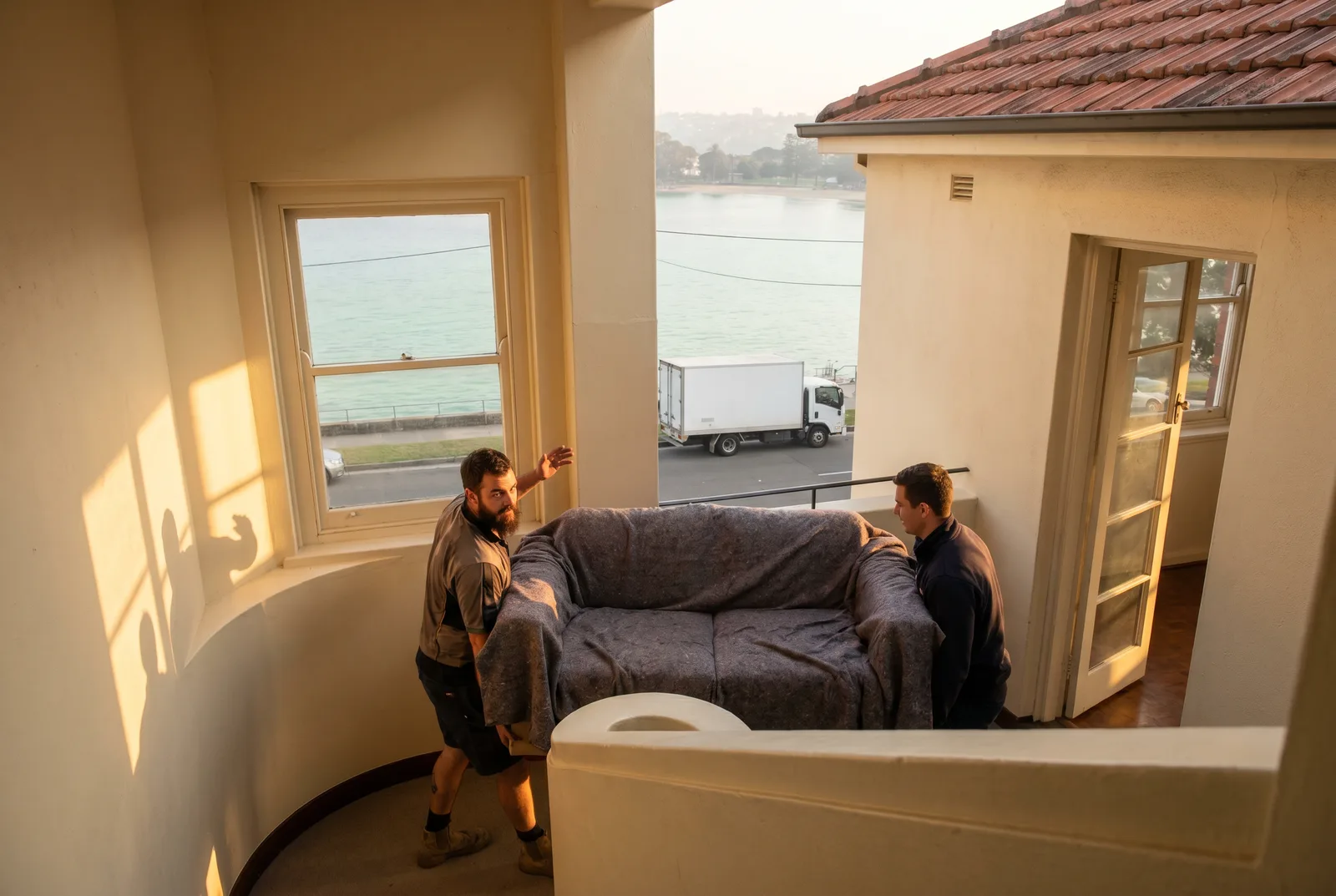
The crew splits into two jobs. The stair team works the building: two movers who take every piece down the flights, one walking backwards and calling the turns, one bearing the weight on the downhill side. The ground team cycles between the street door and the tailgate, so furniture never queues in the common hall and nobody stands on a landing holding a wardrobe while someone finds the ramp.
Before the first piece moves, the building gets dressed: rail padding on the balustrades, corner guards on the plaster returns, a runner on any carpeted landing. Interwar stairwells have survived ninety years of moves; ours won't be the one that marks them.
The three measurements that matter
Take these before you book, whoever you book. Sixty seconds with a tape measure removes the biggest surprise a walk-up move can spring.
- The tightest turn. Usually the half-landing: measure its depth from the wall to the balustrade, and the stair width between rails. This is what your sofa has to negotiate.
- The biggest piece. The sofa or the wardrobe: height, depth and diagonal. A sofa moves through a turn on its diagonal, so the diagonal is the number that decides.
- The street door. Width, and whether it opens fully. Deco entry doors are handsome and occasionally narrower than the stairs they lead to.
If the diagonal beats the turn, the piece still usually goes: over a balcony with proper straps and enough hands, or with its feet and back removed. Knowing before move day is the difference between a scheduled solution and an expensive pause. Tell us the numbers on the form and the plan arrives ready.
What the building's other residents will remember
In a walk-up, a move is a shared event whether anyone wants it to be or not. The version worth aiming for: the truck arrived early and stood legally, the hall stayed passable, the stairwell was padded, and by mid-morning the whole thing was over. That's what method looks like from a neighbour's doorway, and it's why agents on the beachfront see us twice: once moving a tenant out, again when the next flat comes up.
Stair moves pair badly with a contested kerb. On The Esplanade and the flat streets behind it we start at 7am on a weekday for the reasons laid out in the kerb window guide: the carry is indoors, but the truck it feeds is not.